
On 2 October, the G7 agreed to accelerate the release of emergency stocks pledged in March, with diesel prioritised. Completing the outstanding commitments would bring approximately 100 million barrels to market.
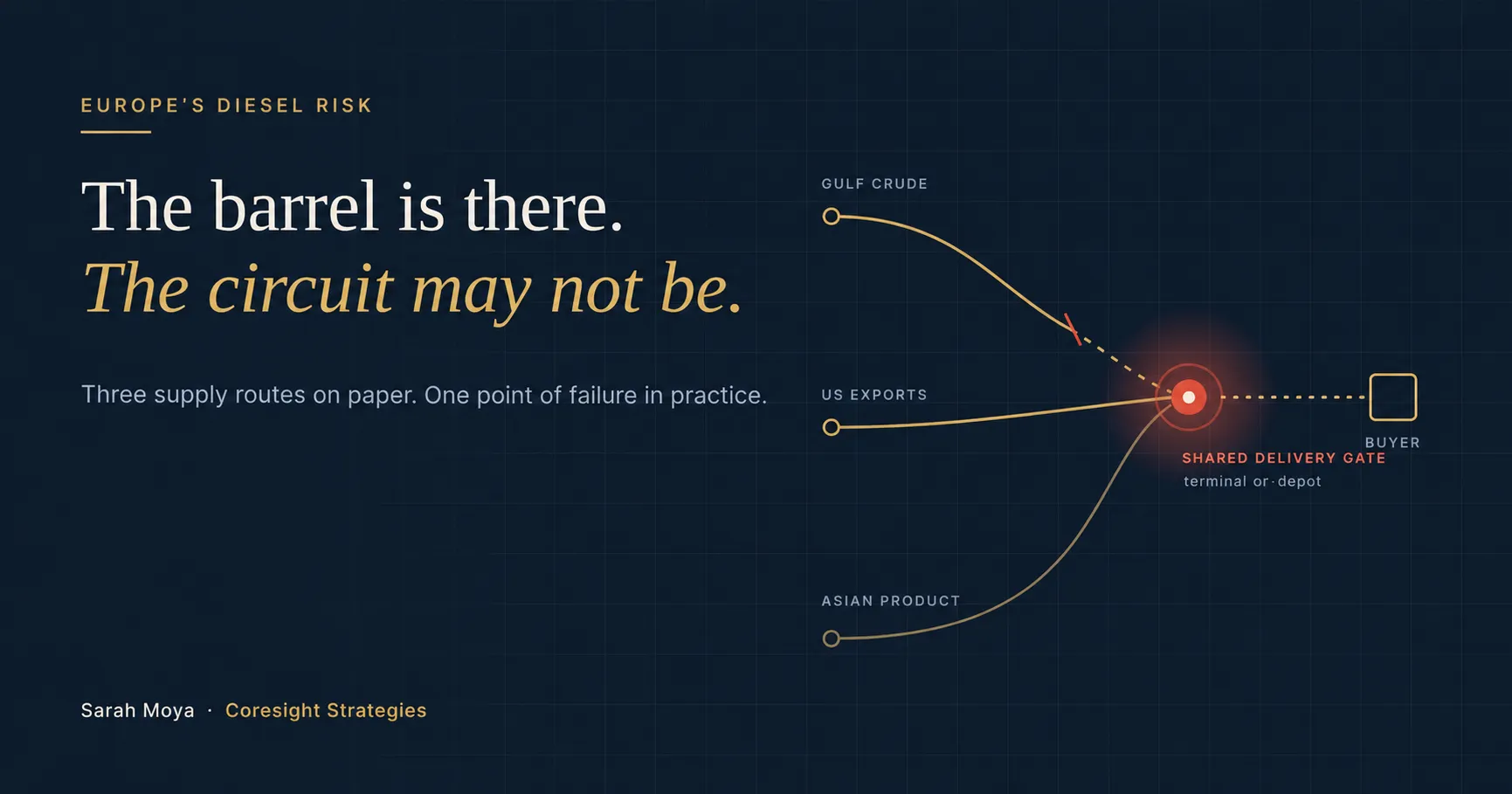
This response may ease immediate market pressures without resolving structural vulnerabilities: refining capacity, shared logistical dependencies and differing levels of exposure across European countries.
The analysis examines how these constraints can affect fuel procurement, transport costs, contractual obligations and corporate cash flow. It also identifies the signals to watch as winter approaches.