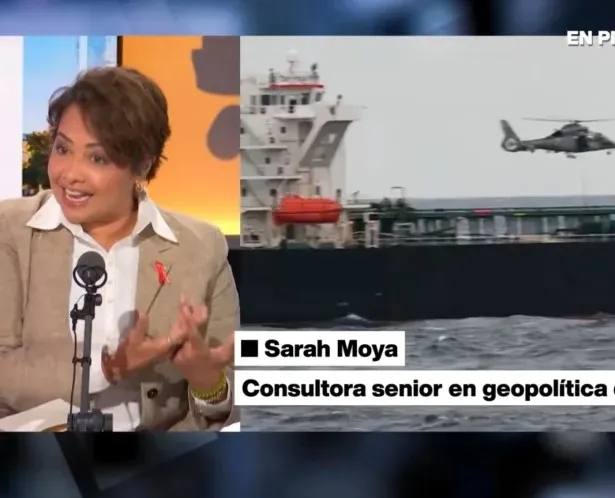
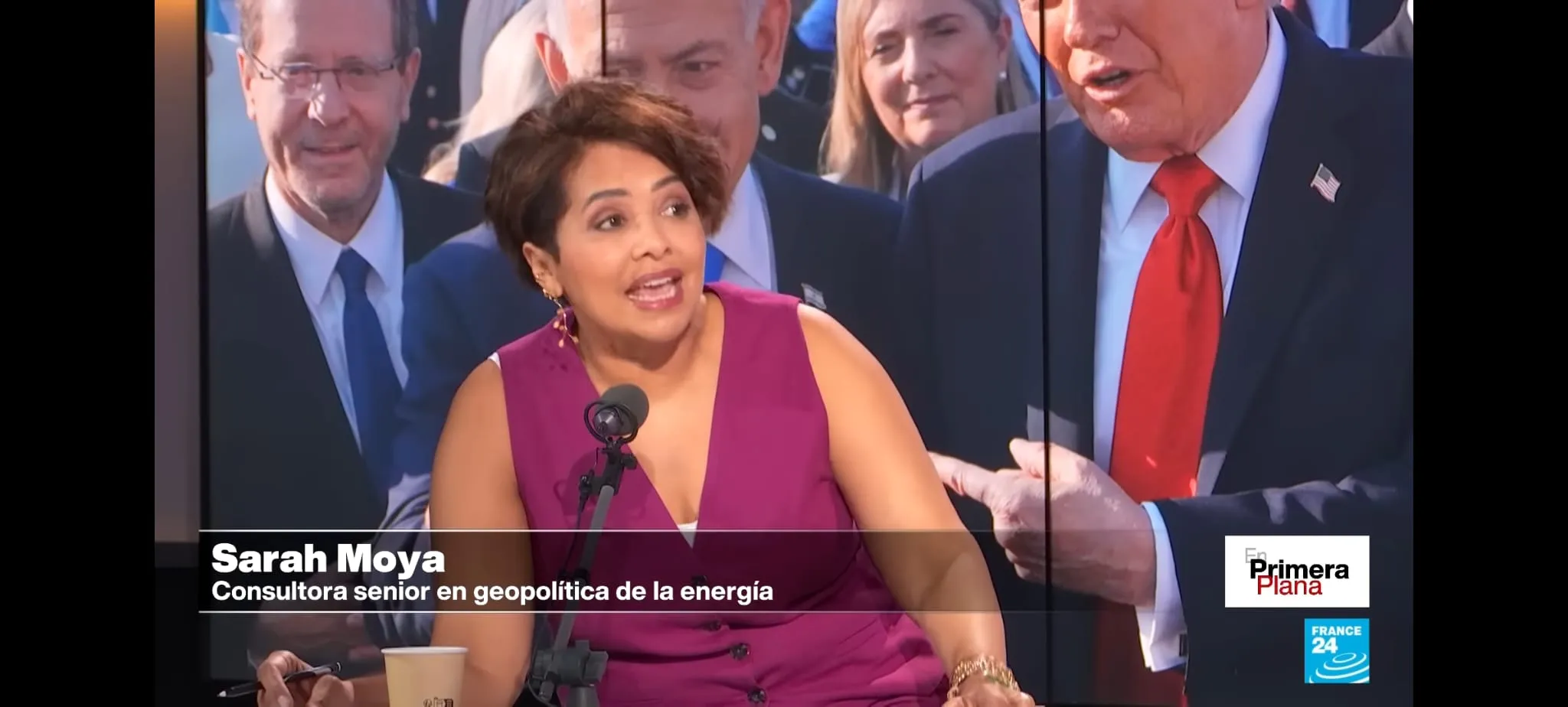
On En Primera Plana, the RFI / France 24 Español program, I argued that the mistake is to read the Strait of Hormuz only through a binary question: is it open or closed?
That binary no longer captures the reality of the risk.
A strait can remain formally open while every transit becomes more difficult to insure, finance, contract and legally clear. That is the shift companies need to understand.
The risk does not disappear when the benchmark price moves — in either direction. A falling Brent can suggest calm; a spiking Brent can suggest chaos. Neither tells you where the risk actually sits. It moves elsewhere in the system.
It moves into freight.
It moves into war-risk insurance.
It moves into P&I coverage.
It moves into LNG delivery risk.
It moves into refined products.
It moves into letters of credit.
It moves into force majeure clauses.
It moves into sanctions exposure.
It moves into the legal predictability of the route itself.
This week offered a live demonstration: when some war-risk underwriters began advising shipowners to pause Hormuz voyages, it was the clearance layer — not geography — that decided whether vessels could sail.
This is why Brent, WTI or the OPEC basket cannot be read as a complete risk dashboard.
A benchmark price can be real and still be incomplete.
Recent market debates around oil point in the same direction: the price of crude is only one layer of the system. Demand signals, inventories, refining margins, physical flows, insurance and product markets must be read together.
For companies, the question is not simply where oil is trading.
The question is whether the flow can still be secured.
Can the vessel transit?
Can the cargo be insured?
Can the bank finance the transaction?
Can the buyer rely on delivery?
Can the refinery access the right barrel?
Can the contract absorb delay, rerouting or force majeure?
Can the route remain legally predictable?
This is where Hormuz becomes more than an energy chokepoint.
It becomes a risk clearance system.
Every vessel is no longer just a vessel. It is a risk file: owner, flag, cargo, insurer, route, bank, sanctions exposure, counterparty, political signal.
That is why the legal dimension matters. If navigation through a strategic strait becomes conditioned by permission, tolls, designated routes or “safe passage” defined by competing powers, the issue is no longer only operational. It becomes a precedent.
A precedent in maritime circulation.
A precedent in political control.
A precedent in the cost of access to global supply chains.
This is the core point I made on RFI / France 24 Español: instability does not disappear. It shifts.
And when it shifts, companies that only monitor the headline price are late.
At CoreSight Strategies, our work is to read those shifts before they appear as margin loss, contractual exposure, disrupted logistics or strategic dependency.
The lesson from Hormuz is not that every company should become an oil trader.
It is that every exposed company should understand where its real risk has moved.
Watch the full discussion on RFI / France 24 Español here:
Full RFI program: